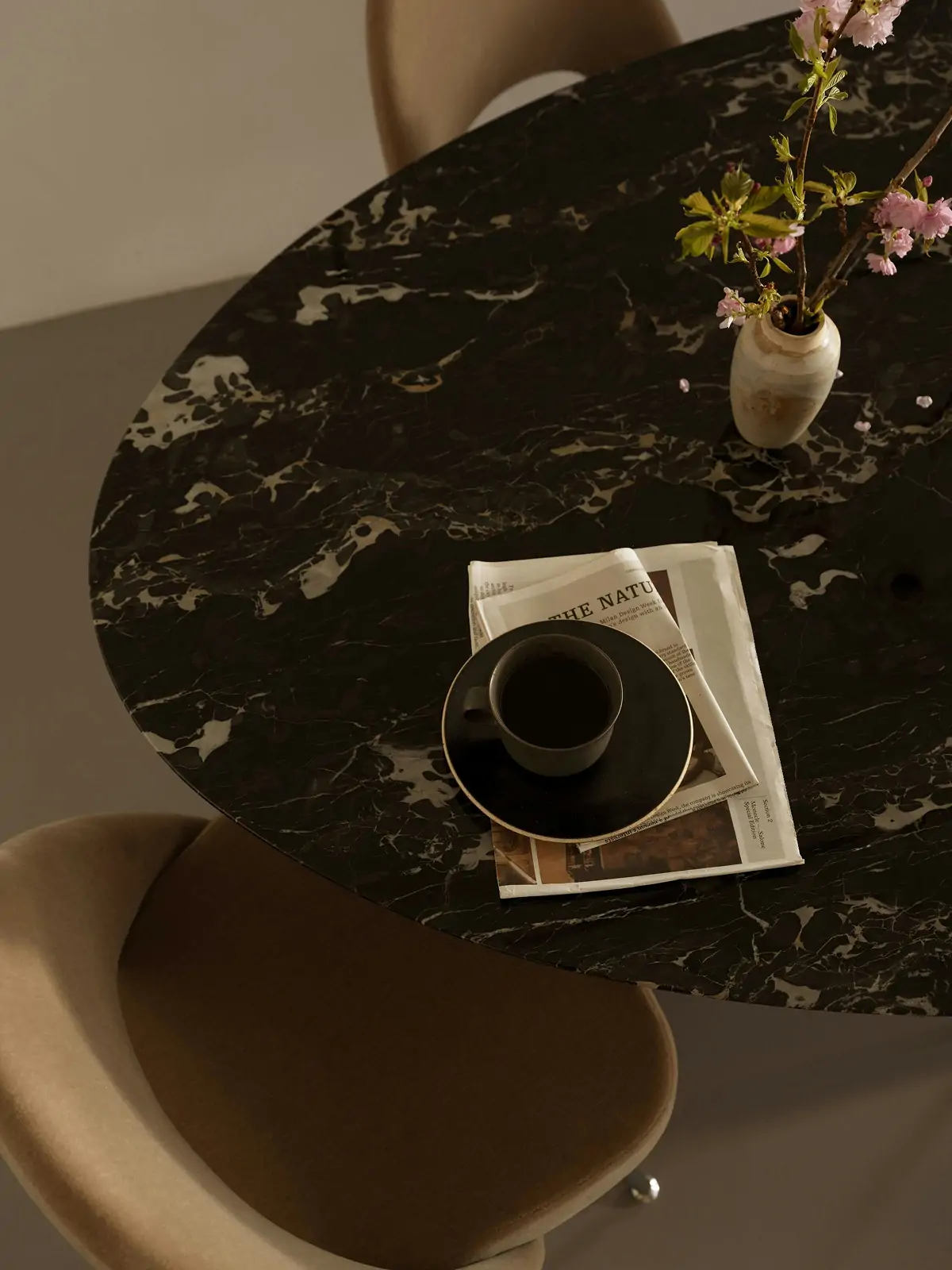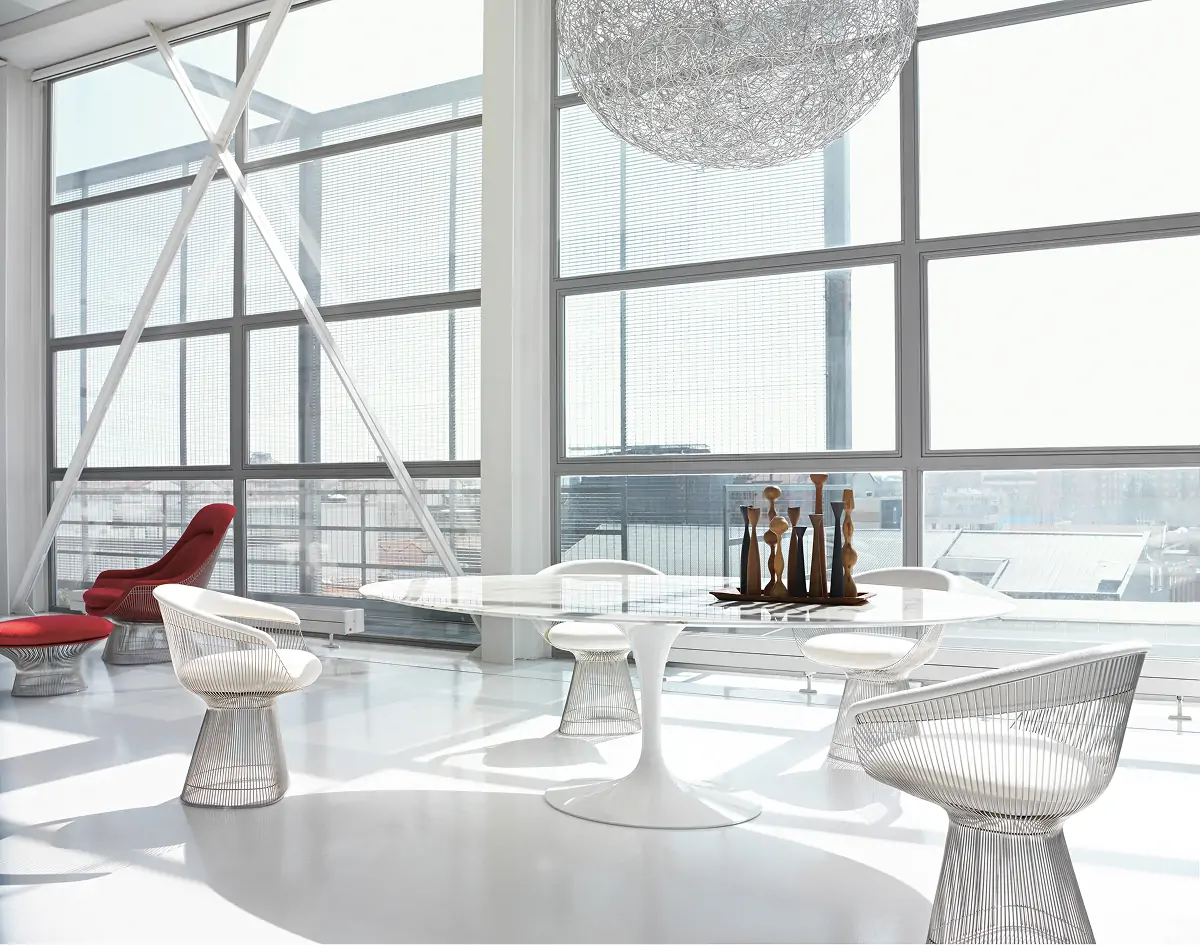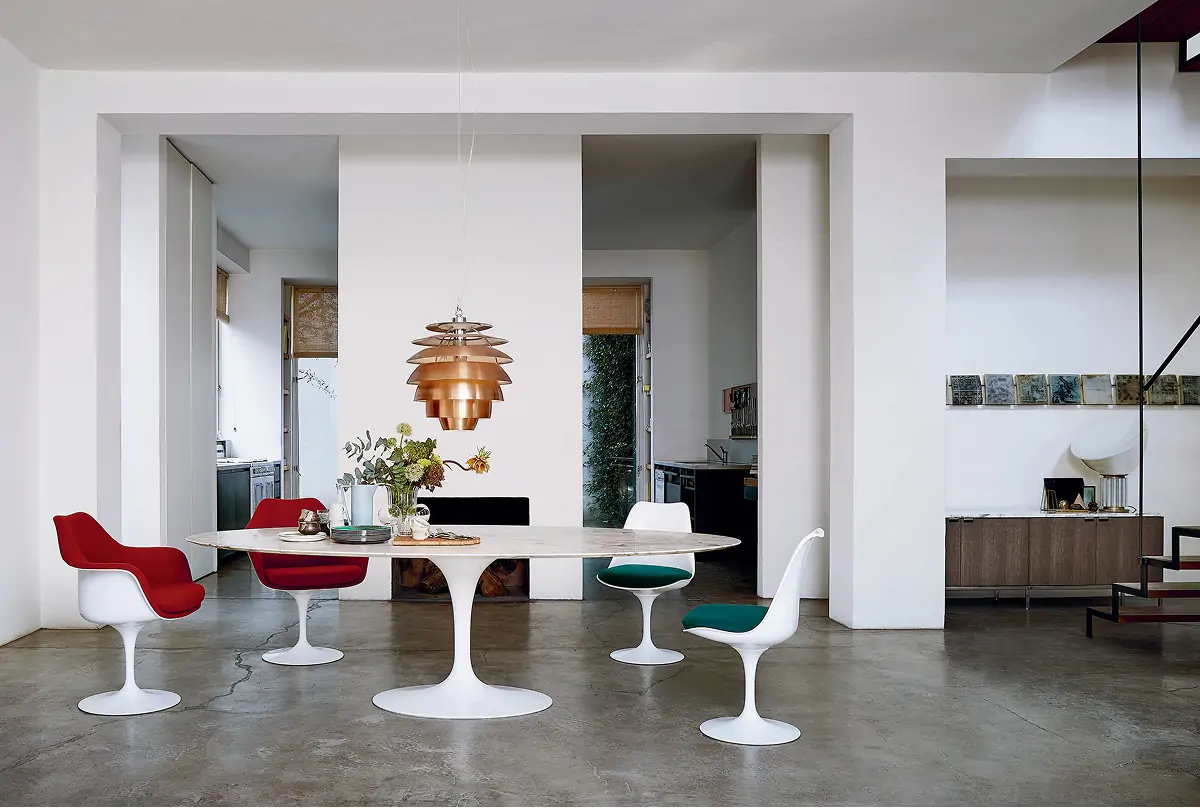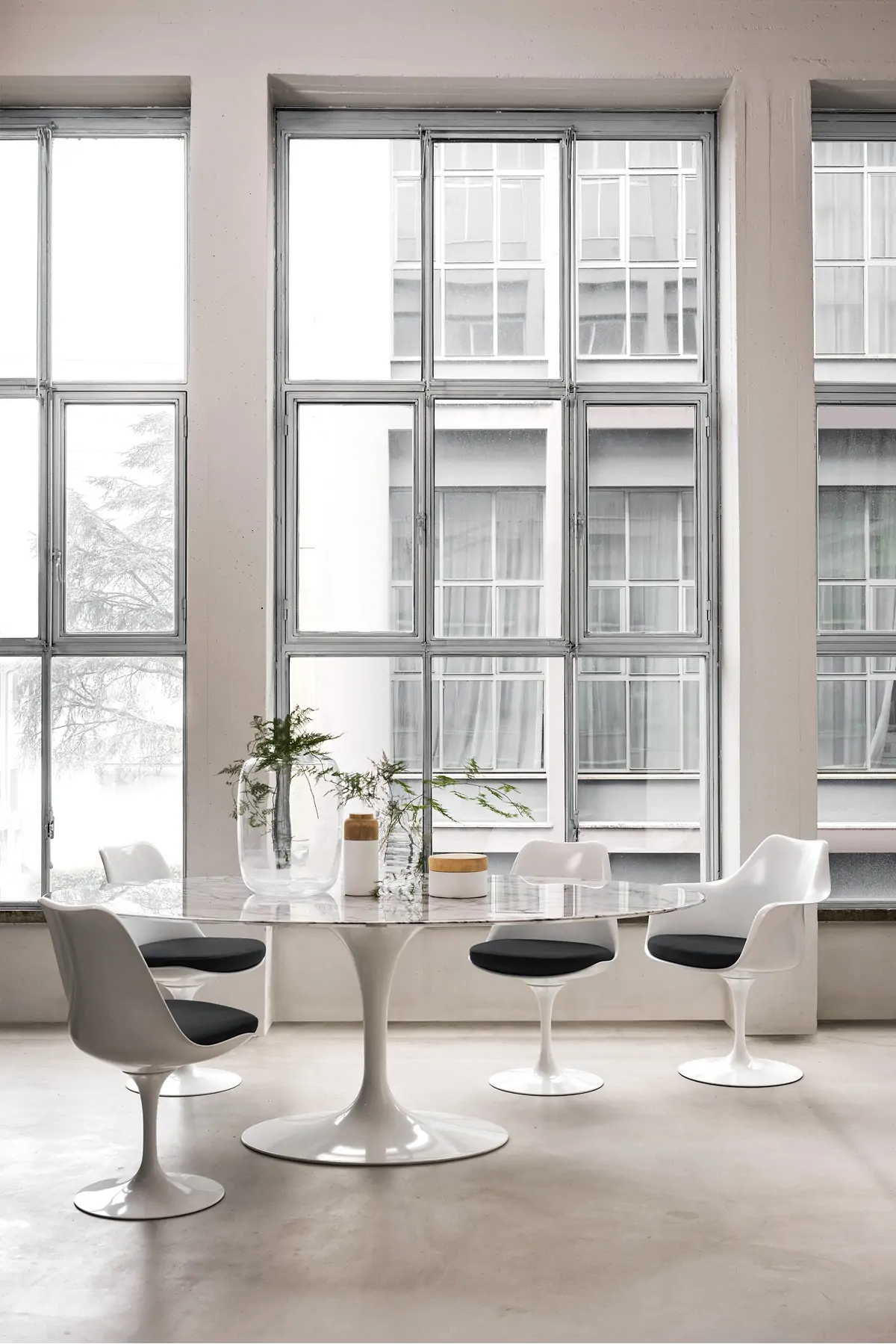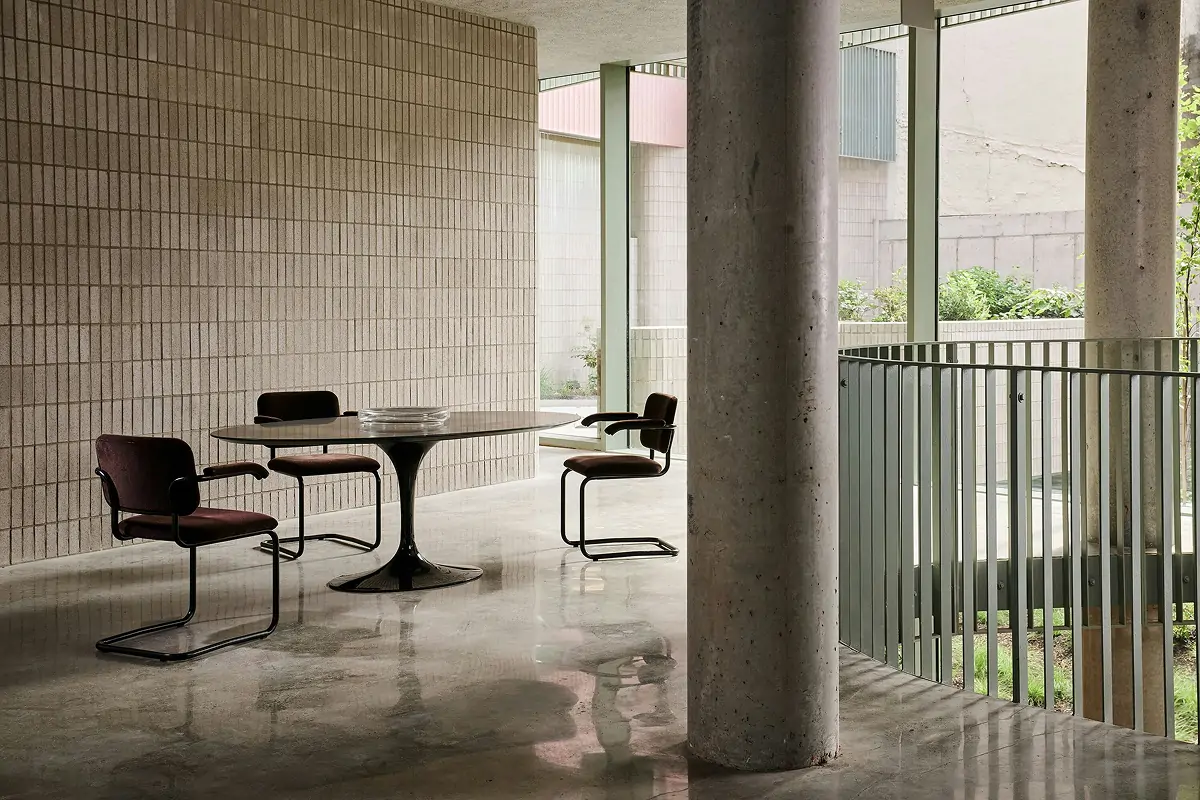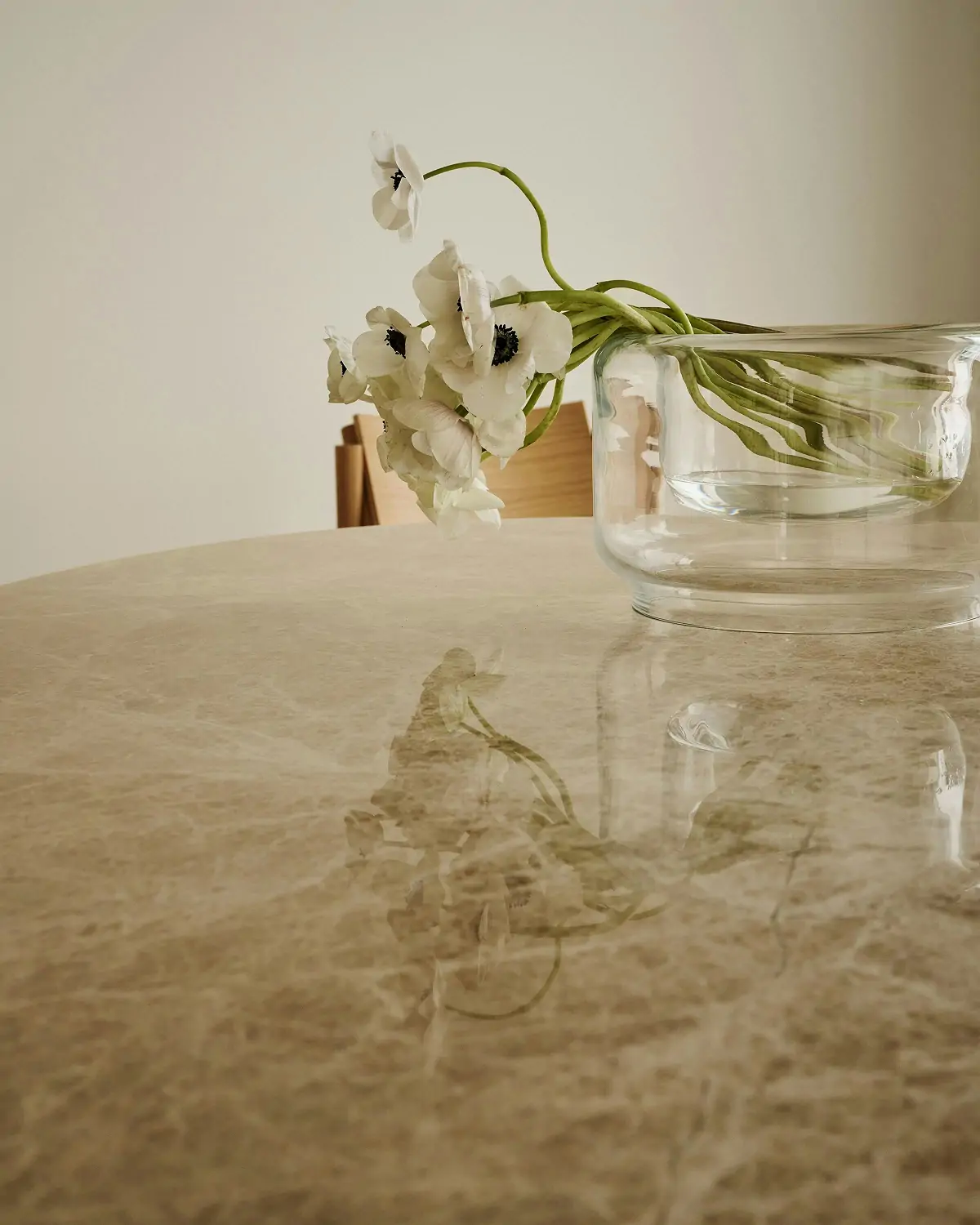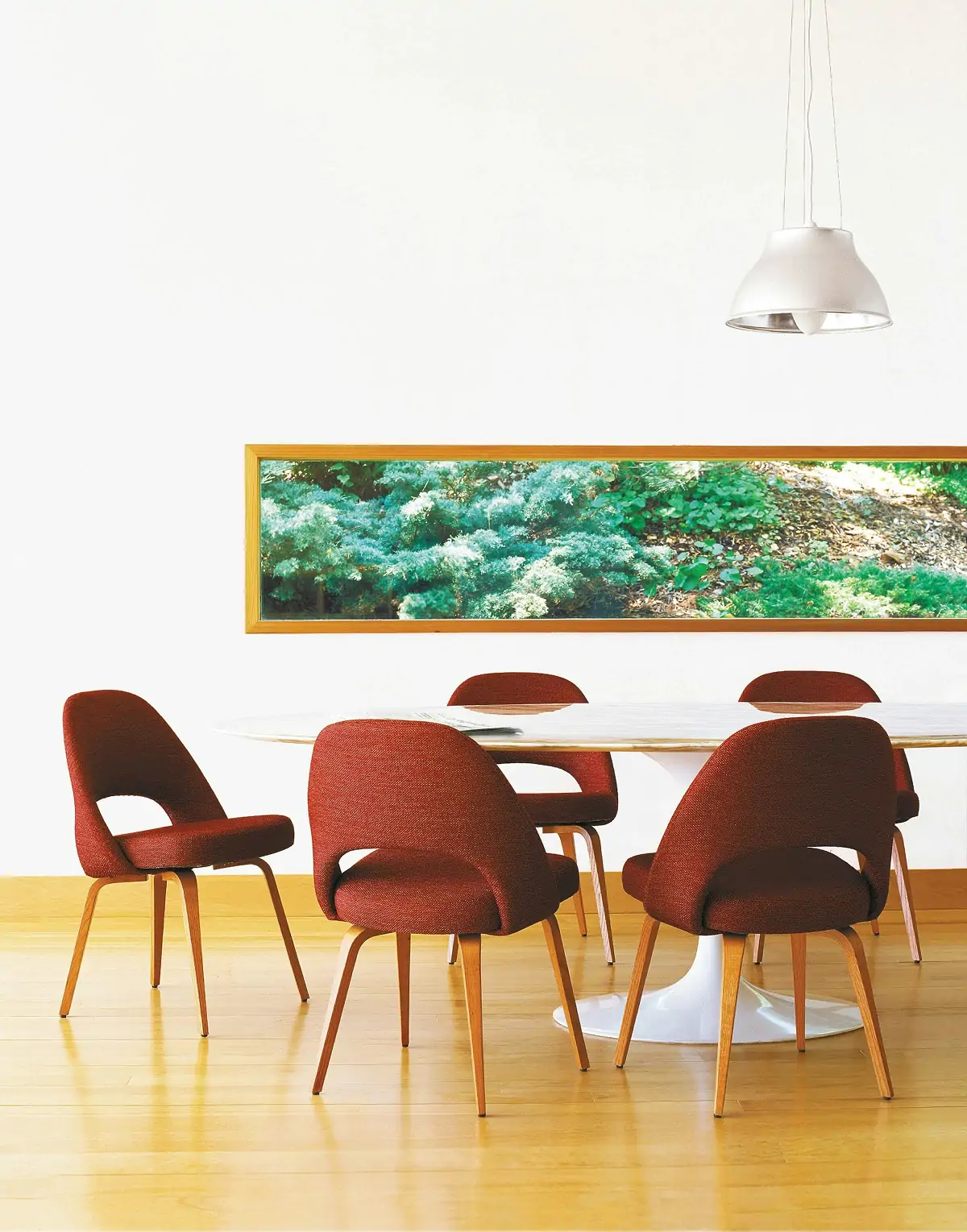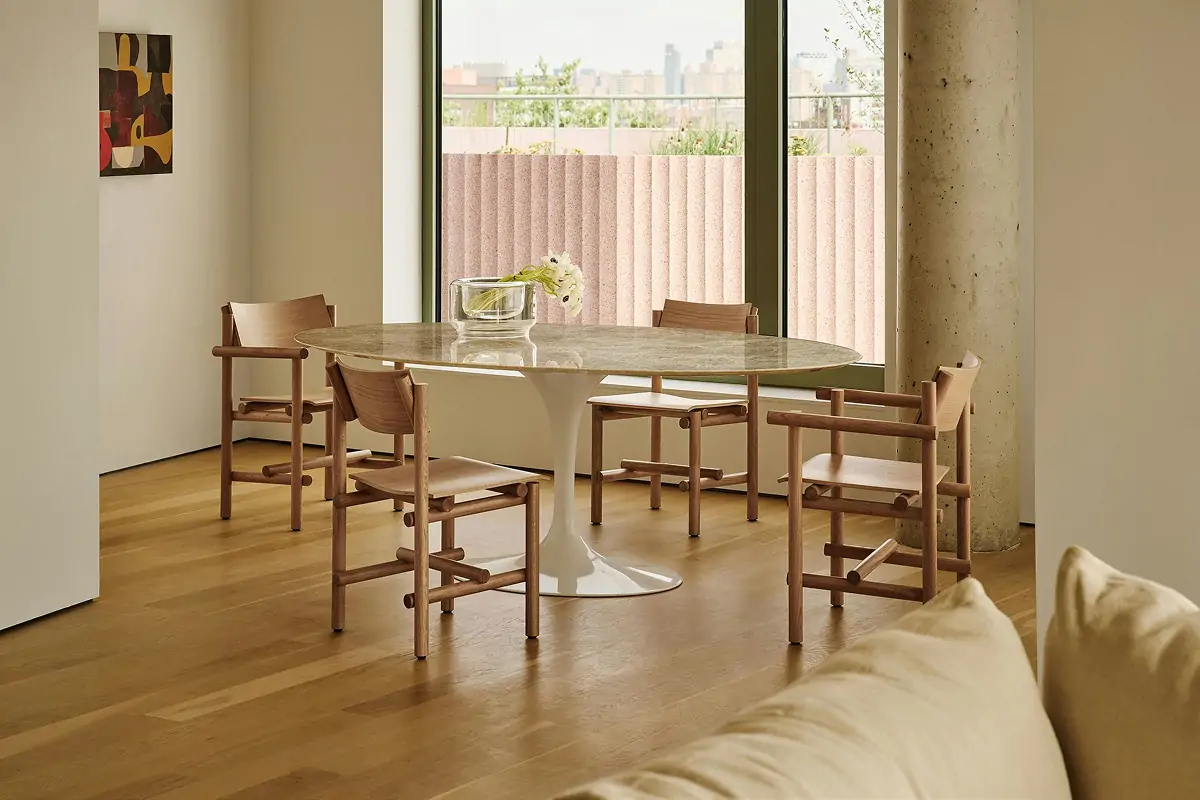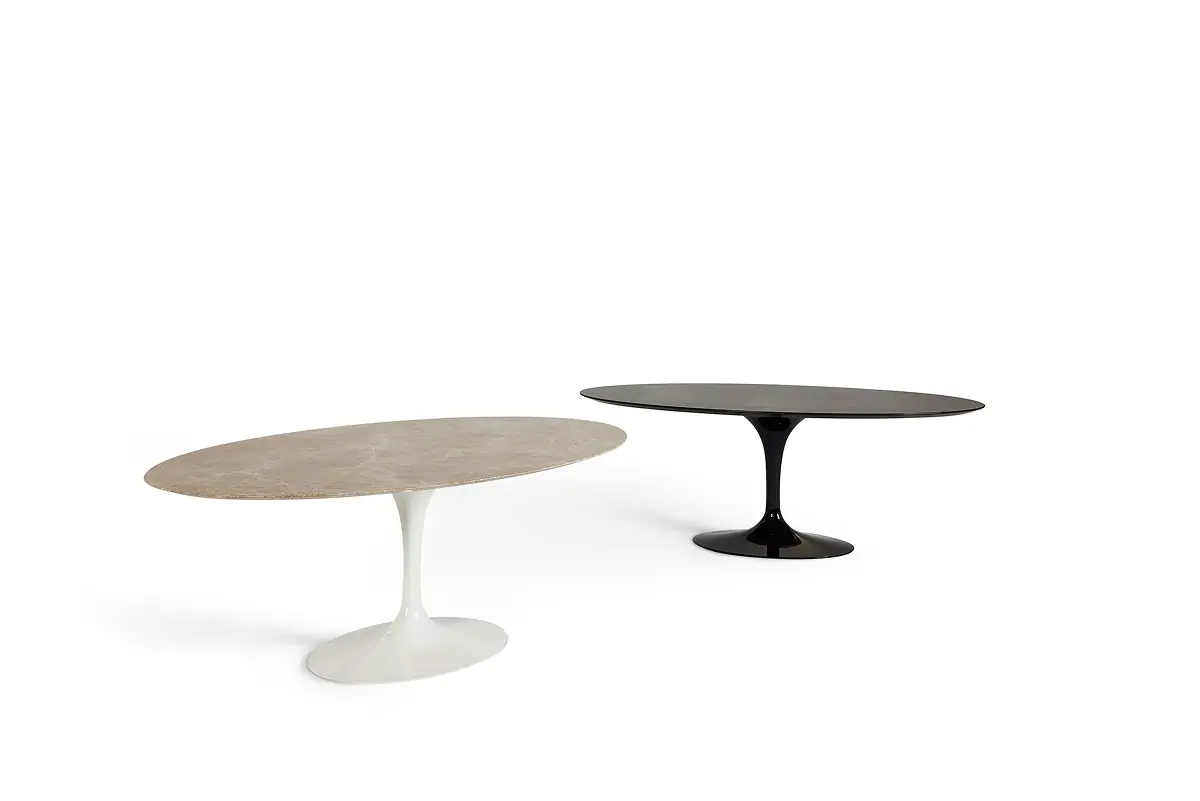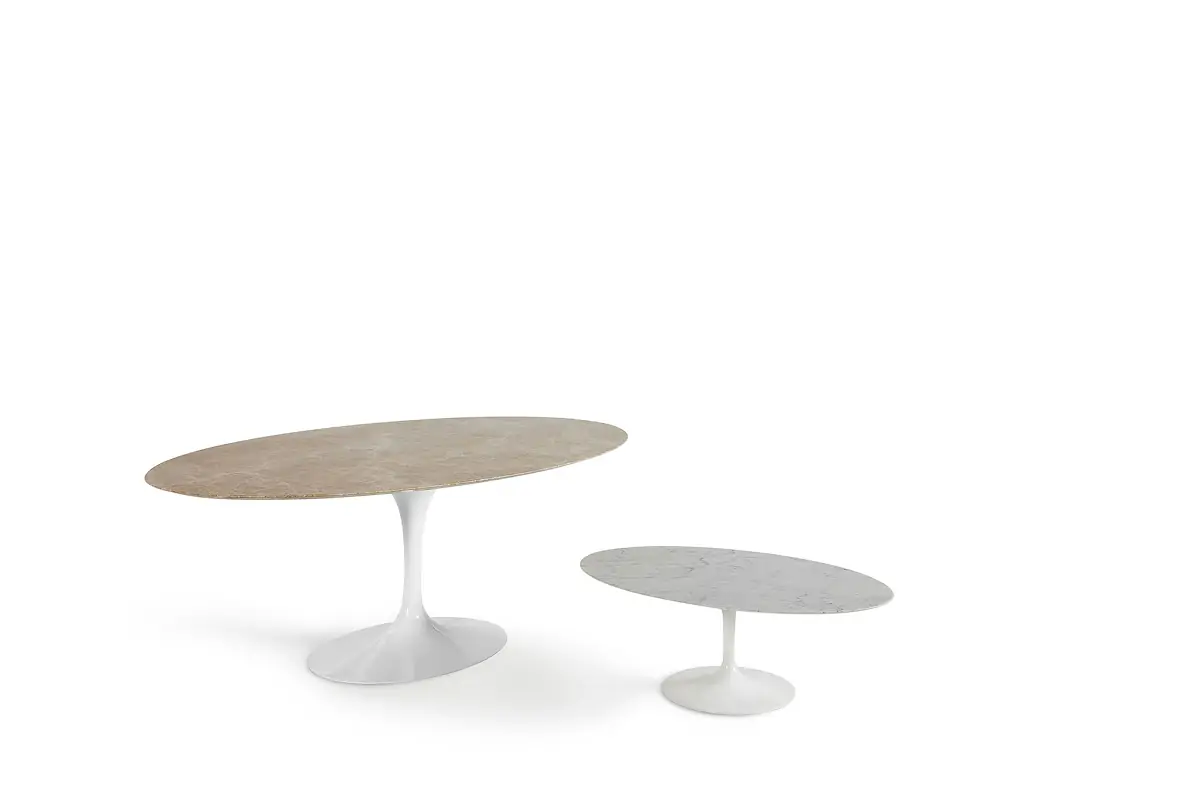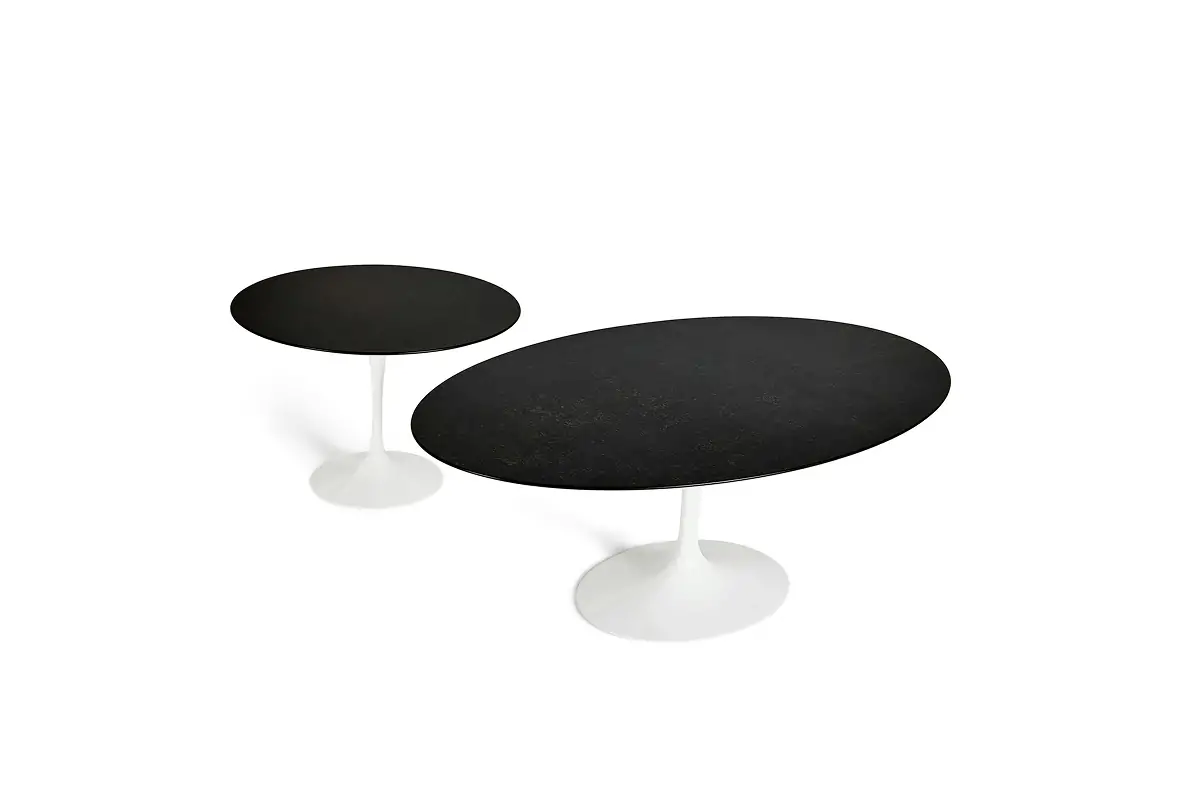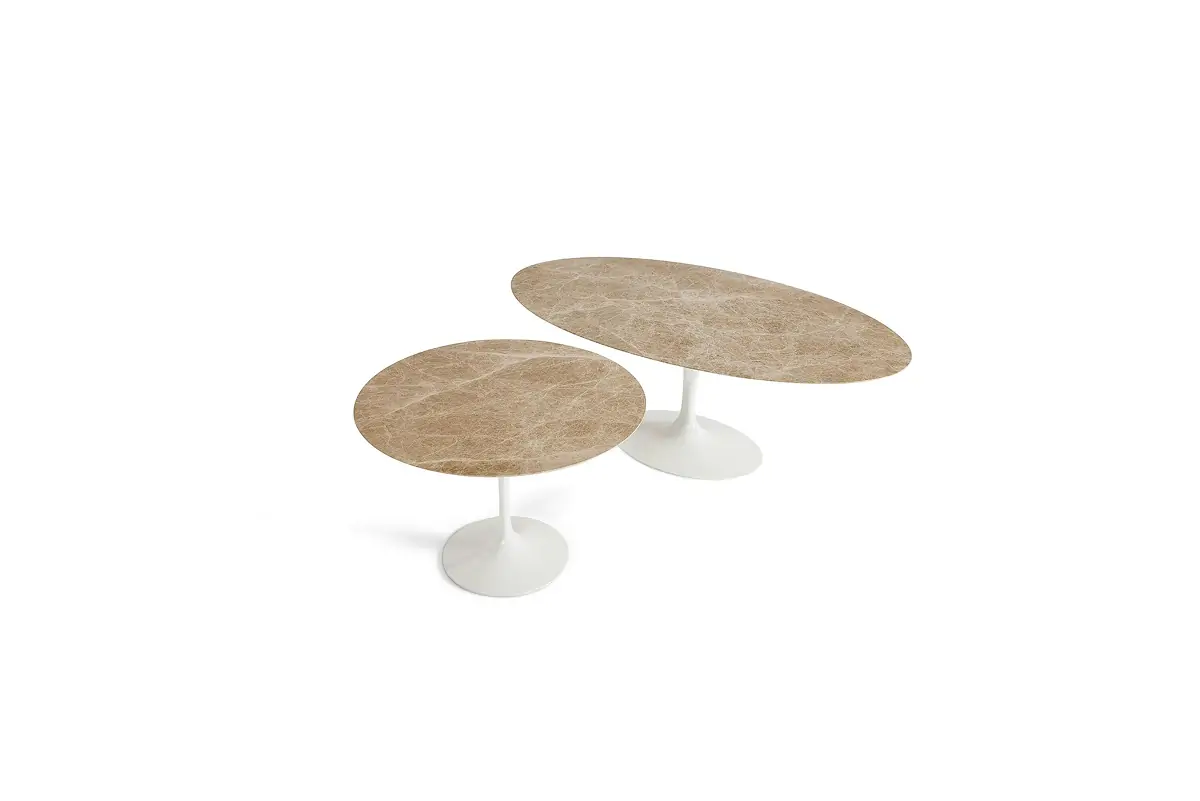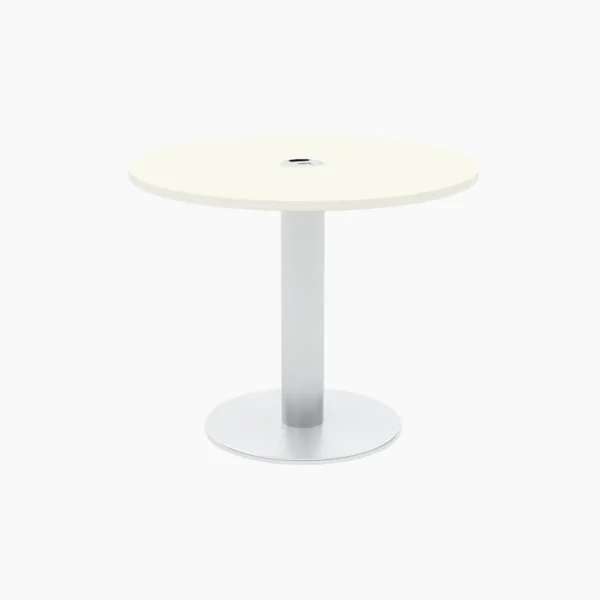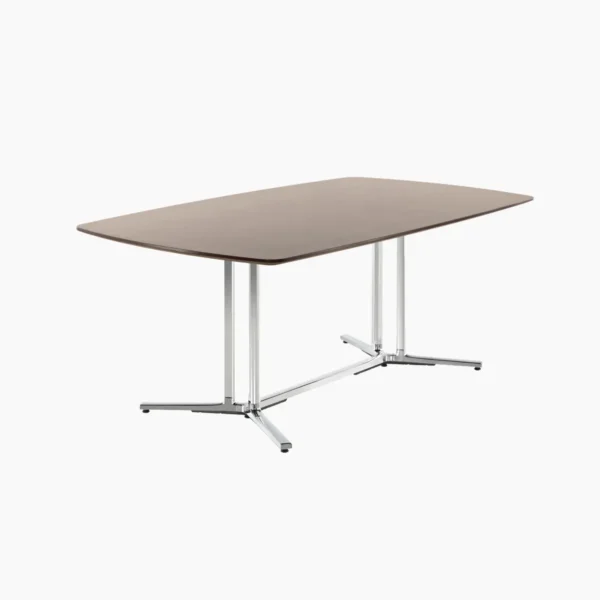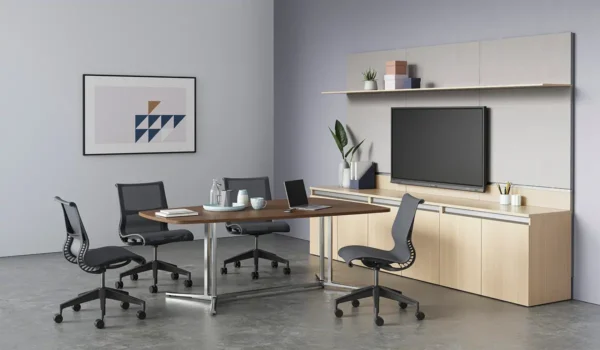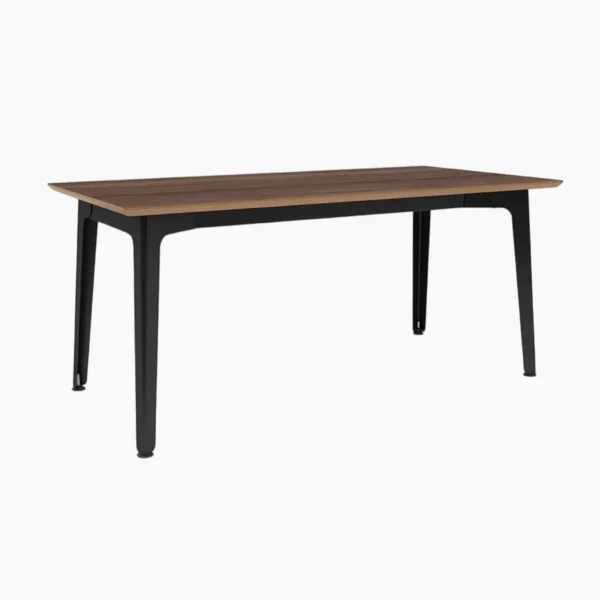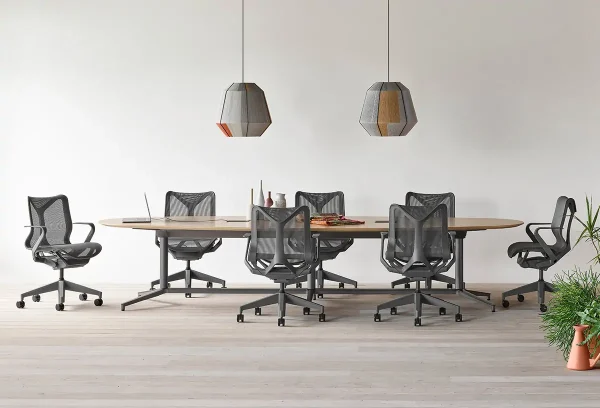

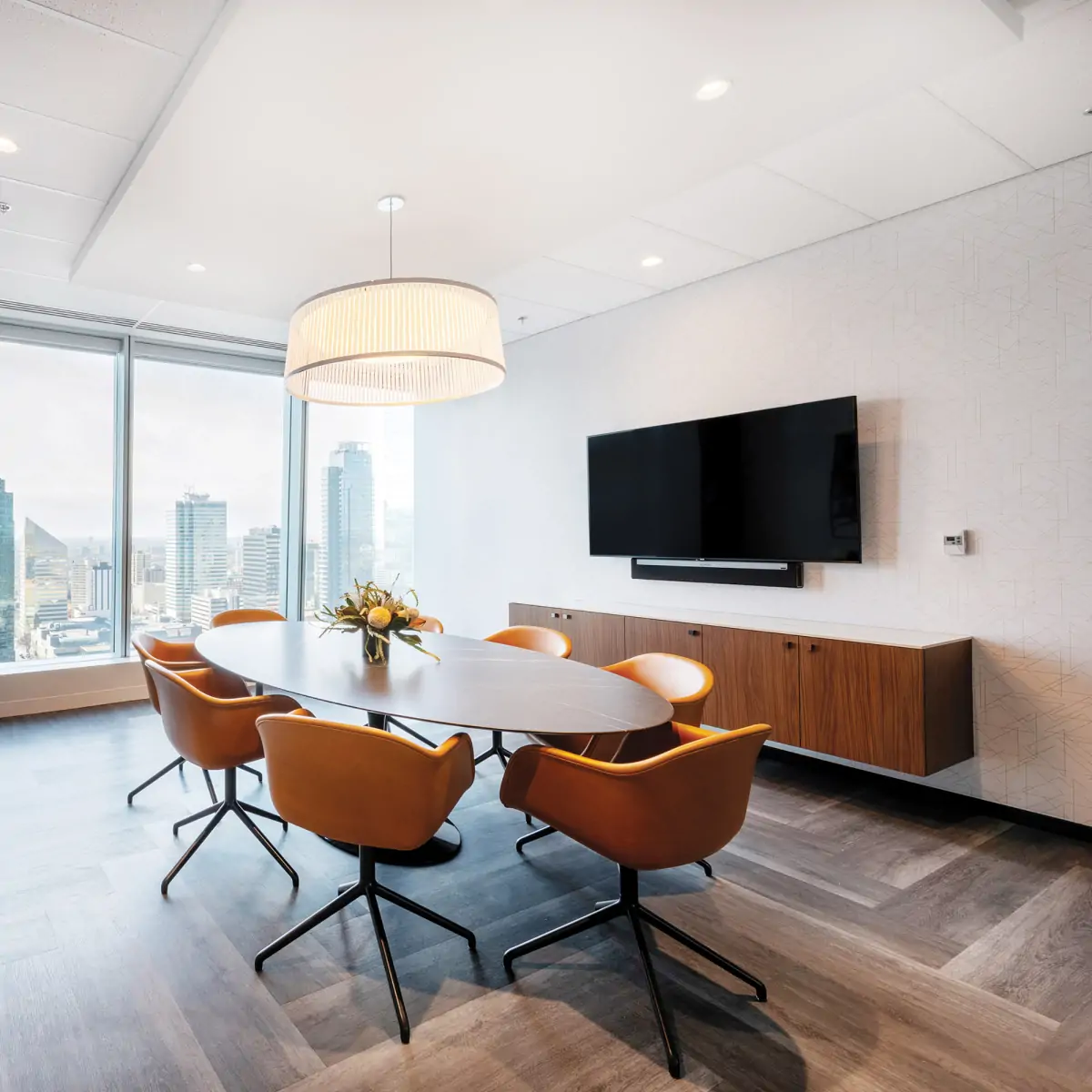
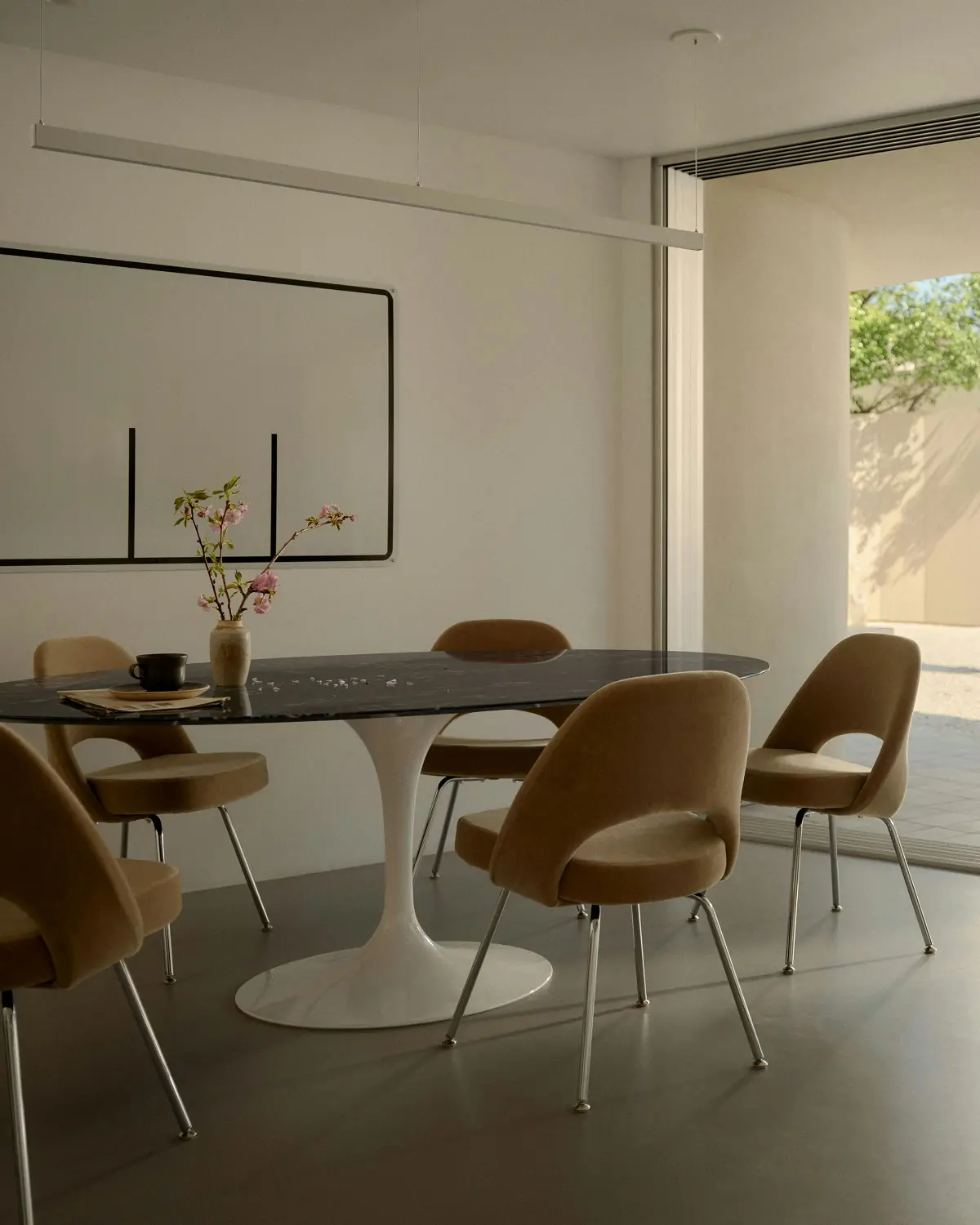
The Saarinen Pedestal Table demonstrates Eero Saarinen’s purist approach to architecture and design. Seeking a solution to resolve the “confusing, unrestful world” underneath tables and chairs, he designed a sculptural base that brings visual and physical freedom to the surrounding environment.
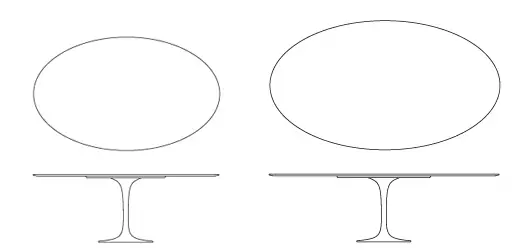
178TO Saarinen Table – 72″ Oval
Width: 72″
Depth: 42″
Height: 28.25″
Seats: 6
174TO Saarinen Table – 78″ Oval
Width: 78″
Depth: 47.75″
Height: 28.25″
Seats: 6
179TO Saarinen Table – 84″ Oval
Width: 84″
Depth: 47″
Height: 28.25″
Seats: 6-8
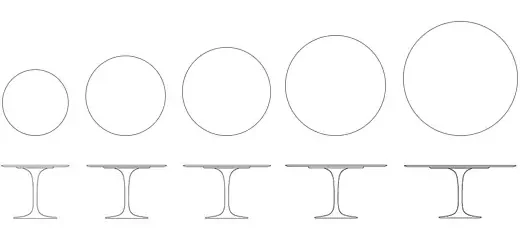
172TR Small Round
Width: 35.75″
Depth: –
Height: 28.25″
Seats: 3-4
173TR Medium Round
Width: 42.25″
Depth: –
Height: 28.25″
Seats: 4
176TR Small Round
Width: 47.25″
Depth: –
Height: 28.25″
Seats: 4-5
164TR Large Round
Width: 54″
Depth: –
Height: 28.25″
Seats: 4-6
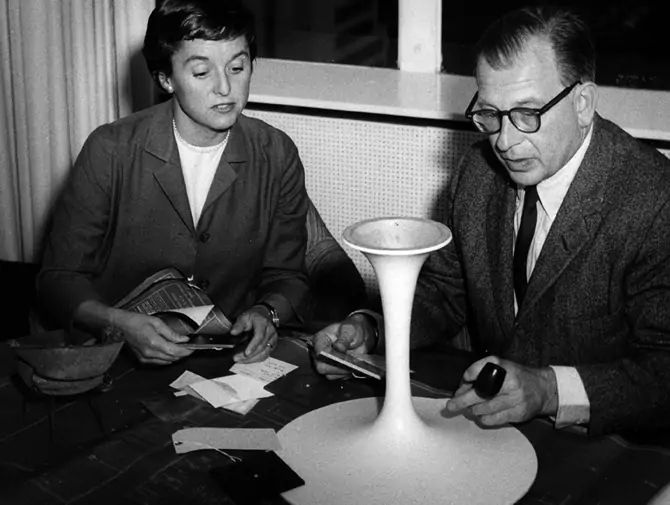
While studying at Cranbrook Academy of Art in the 1930s, Florence Knoll and Eero Saarinen forged a lasting friendship. The connection between these avid students of design evolved into a partnership that produced some of the most revered furniture pieces of the 20th century.
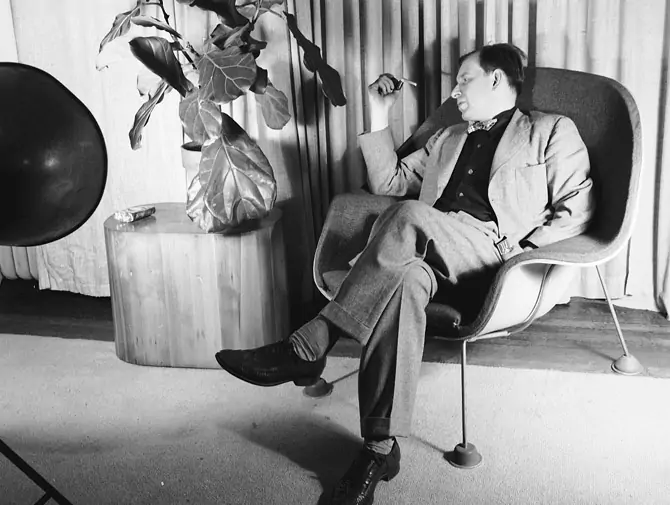
Eero Saarinen insisted that, in any design, “confusion comes from trying to amalgamate several conflicting ideas.” To avoid that confusion, in his furniture, as in his architecture, Saarinen sought the essential idea and represented it formally with clarity and strength, always striving for “consistency and relatedness of all parts.”
In the early 1950s, he turned his attention to the “ugly, confusing, unrestful world” he believed resulted from “the slum of legs” underneath typical tables and chairs. In 1957, he realized his ideal of formal unity with the Pedestal Table and Tulip Chair collections for Knoll. These majestically effortless, one-legged tables and chairs have since become symbols of modern design and mainstays of the Knoll design legacy.